Sealed Spaces That Stay Dry Year-Round
Crawl Space Encapsulation in Greenwood for homes with recurring moisture, mold growth, or high energy bills caused by uncontrolled airflow
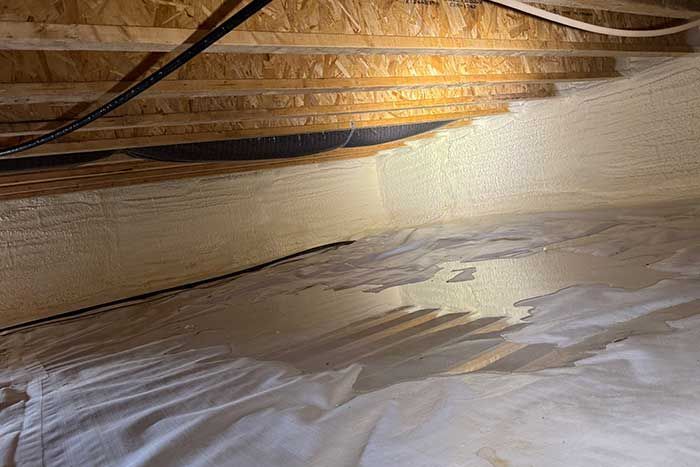
When condensation forms on crawl space walls during humid months, mold begins to spread on wooden beams, and your heating and cooling costs climb without explanation, the problem is uncontrolled moisture and air exchange beneath your home. A1 Restoration provides crawl space encapsulation in Greenwood to seal the space completely, block ground vapor, and eliminate the conditions that allow mold and structural damage to develop. This process involves installing a heavy-duty vapor barrier across the floor and up the foundation walls, sealing all vents and gaps that allow outside air to enter, and adding a dehumidification system to maintain stable humidity levels.
Encapsulation transforms your crawl space from a vented, dirt-floor area into a controlled environment that no longer fluctuates with outdoor temperature and humidity. The vapor barrier we install is thicker than standard plastic sheeting and is sealed at every seam and penetration point to prevent any moisture from entering the space. Vents that were once open to outside air are permanently sealed, and any cracks or openings around plumbing or electrical lines are closed to stop air intrusion.
Arrange an on-site assessment to evaluate your crawl space's current condition and determine which encapsulation components will address your specific moisture issues.
What You Notice Once Encapsulation Is Finished
After encapsulation, the crawl space remains dry regardless of rainfall or seasonal humidity changes because the vapor barrier blocks ground moisture and the sealed environment prevents humid outdoor air from entering. The dehumidifier installed as part of the system actively removes any residual moisture, keeping relative humidity below the threshold where mold can grow or wood can absorb water.
You'll notice that floors above the crawl space feel warmer in winter and cooler in summer because the encapsulated space no longer allows unconditioned air to flow freely beneath your home. The musty smell that once rose through floorboards disappears, and your HVAC system cycles less frequently because it's no longer compensating for air leaks and temperature swings from below. Energy bills typically decrease as the system stops working against drafts and moisture-laden air.
Encapsulation also prevents pest intrusion by eliminating the damp, dark environment that attracts insects and rodents. The sealed system includes long-term maintenance solutions such as dehumidifier monitoring and occasional barrier inspections to verify that no new openings have developed. This approach protects your investment and maintains air quality improvements over time.
Answers to Frequent Service Questions
Property owners considering encapsulation want to understand the process and its impact on their home. These are the questions we hear most often.
What is the difference between encapsulation and just installing a vapor barrier?
Encapsulation involves sealing the entire crawl space environment, including walls, vents, and penetrations, and adding dehumidification to actively control moisture. A vapor barrier alone covers the floor but doesn't address air exchange or humidity control, so moisture problems often persist.
How does sealing crawl space vents improve energy efficiency?
Open vents allow hot, humid air to enter in summer and cold air in winter, forcing your HVAC system to condition that air along with your living space. Sealing vents stabilizes the crawl space temperature, reducing the load on heating and cooling equipment and lowering energy consumption.
When should encapsulation be done in Greenwood?
Encapsulation can be performed year-round, but scheduling during drier months allows the crawl space to be thoroughly dried before sealing, which prevents trapping existing moisture inside the encapsulated space. Spring and fall are often ideal for this work.
What type of dehumidifier is used for crawl space encapsulation?
We install commercial-grade dehumidifiers designed specifically for crawl spaces, which are more robust than household units and can handle the moisture load in sealed environments. These units include automatic drainage and humidity sensors that adjust operation based on conditions.
How long does the vapor barrier material last once installed?
High-quality encapsulation barriers are designed to last decades without degrading, as long as they're not punctured or disturbed by future work in the crawl space. We use reinforced materials that resist tears and UV damage if any light exposure occurs.
A1 Restoration designs encapsulation systems based on your property's specific layout and moisture challenges. Contact us to schedule a crawl space inspection and receive a detailed proposal for creating a healthier, more efficient home.