Immediate Response When Disasters Strike
Emergency Restoration Services (24/7) in Greenwood for urgent water, fire, and storm damage requiring immediate stabilization and mitigation
Pipes burst in freezing temperatures, fires spread through electrical failures, and storms tear through roofs without warning. These emergencies demand immediate action to prevent damage from worsening. A1 Restoration operates a 24/7 emergency response team in Greenwood equipped to handle water, fire, and storm-related crises at any hour. Our team arrives with extraction equipment, tarping materials, dehumidifiers, and stabilization tools to stop the progression of damage and secure your property while a full restoration plan is developed.
Emergency restoration begins with rapid damage assessment to identify immediate threats such as standing water, structural instability, or ongoing water intrusion. We perform temporary repairs that stabilize the situation—extracting water, covering roof openings, shutting off compromised plumbing, and securing damaged windows or doors. Mitigation techniques such as dehumidification and air circulation are deployed to prevent mold growth and further material deterioration while permanent repairs are planned.
Call our emergency line immediately if your property has experienced sudden damage that requires urgent stabilization to prevent additional loss.
What Proper Emergency Mitigation Requires
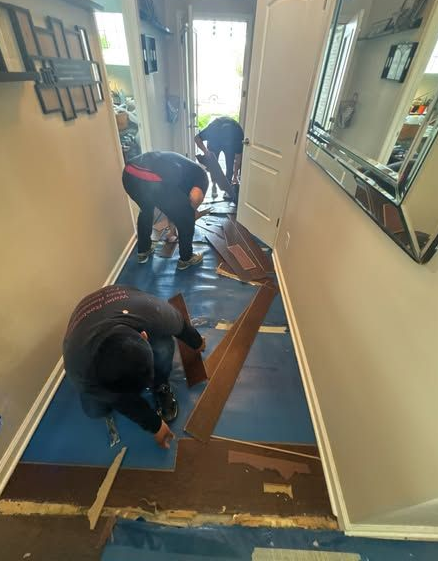
Effective emergency mitigation depends on speed, proper equipment, and understanding how different materials respond to water, fire, or storm damage. Water must be extracted within hours to prevent flooring from delaminating and drywall from wicking moisture upward. Fire-damaged areas require immediate ventilation and deodorization to prevent smoke odor from permeating unaffected materials. Storm damage demands immediate weatherproofing to stop rain from entering compromised structures.
After emergency services are complete, your property is stabilized, water has been removed, structural threats have been addressed, and further damage has been halted. You'll notice that floors are no longer soaked, ceilings aren't dripping, smoke odors are being actively controlled, and exposed areas are protected from weather. The emergency phase transitions into full restoration once the immediate crisis is contained and a comprehensive repair plan is in place.
Our team coordinates directly with insurance adjusters during the emergency response, providing real-time documentation and damage reports that support your claim from the outset. This coordination reduces delays in approval and ensures that mitigation costs are included in your coverage. We also provide detailed records of all emergency actions taken, materials used, and conditions found upon arrival.
Questions Before Starting Your Project
Emergencies create stress and uncertainty. These answers address the most common concerns we hear from property owners during crisis situations.
What happens during the initial emergency response?
Our team arrives, assesses the damage, stops the source of ongoing harm such as water flow or structural collapse risk, and begins mitigation to prevent secondary damage. You receive an immediate verbal report of findings and a plan for next steps.
How do you prioritize actions during a multi-system emergency?
We address life safety concerns first, then stop ongoing damage such as water flow or fire spread, followed by mitigation to prevent mold and deterioration, and finally stabilization to allow safe access for repairs. This sequence minimizes total loss.
Why is rapid mitigation critical after water damage in Greenwood?
High humidity levels in Indiana accelerate mold growth, which can begin within 24 to 48 hours of water exposure. Rapid extraction and dehumidification prevent mold colonization and reduce the extent of material replacement required during restoration.
What equipment is used for emergency water extraction?
We use truck-mounted extractors for large-scale flooding, portable extractors for interior spaces, and specialty tools for extracting water from carpets, padding, and subfloors. Air movers and dehumidifiers are then deployed to dry remaining moisture.
How does insurance coordination work during an emergency?
We document all damage and mitigation actions in real time, communicate directly with your insurance adjuster, and provide itemized records of emergency services performed. This documentation supports your claim and helps ensure that emergency costs are covered.
A1 Restoration provides round-the-clock emergency response with the equipment and expertise needed to stabilize your property during any disaster. Save our emergency contact information and call immediately when urgent restoration services are needed.